

A Neighborhood Shaped by Hillsdale’s Story
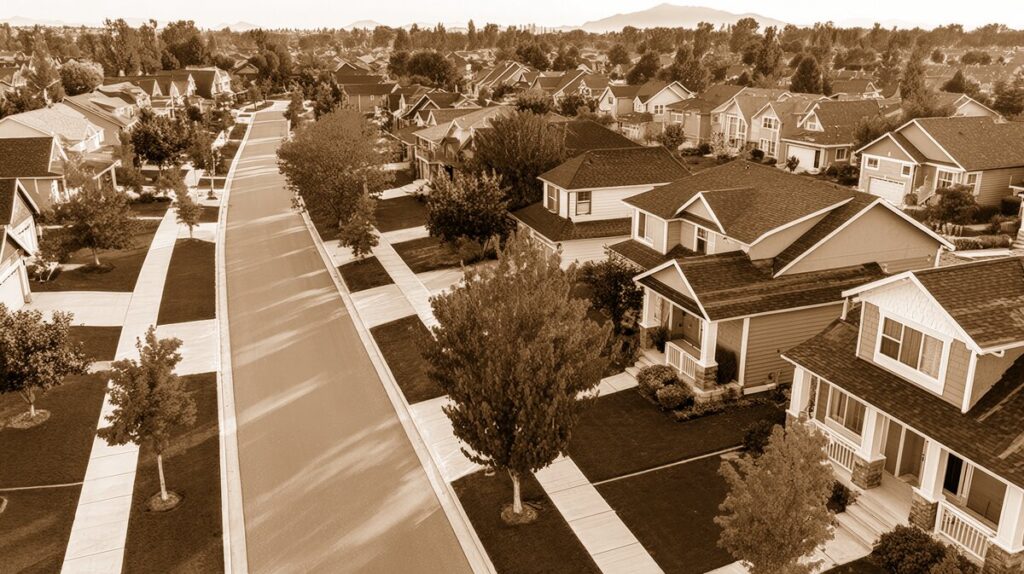
Oak Haven is the kind of Hillsdale neighborhood that reveals its character gradually. It is not defined by one grand monument or a single dramatic event. Instead, its heritage is found in the way streets follow the city’s rolling terrain, in the mature trees that frame older homes, and in its close connection to the institutions, parks, and historic districts that have shaped Hillsdale for nearly two centuries.
The neighborhood belongs to a city whose history began along old travel routes and near the headwaters of local rivers. Before Hillsdale was formally organized, Native communities—including the Potawatomi—lived, traveled, hunted, and traded across the region. The Sauk Trail, later associated with the Chicago Road and US-12, connected southern Michigan with points east and west. Hillsdale County’s recorded history dates to the surveying of that route in 1825, while the community that became Hillsdale developed soon afterward.
That wider history is important to understanding Oak Haven. Like many Hillsdale neighborhoods, it grew from the transformation of rural land into residential blocks as the city expanded around its courthouse, railroad connections, college, factories, and commercial center.
Where the Name “Oak Haven” Comes From
Unlike the City of Hillsdale or the Hillsdale Downtown Historic District, Oak Haven does not appear to have a widely documented founding charter or a formally recognized historic designation of its own. The name is best understood as a neighborhood name rooted in landscape and local usage.
“Oak” is a fitting word for this part of southern Michigan. Mature oaks and other hardwoods have long been part of the area’s natural character, and tree-lined residential streets are among the features that give Hillsdale its settled, welcoming appearance. “Haven” suggests a peaceful residential place—a sheltered neighborhood close to town but removed from the bustle of the commercial district.
That combination describes Oak Haven well. Its identity is less about a boundary drawn on an old state map and more about the lived experience of residents: a comfortable place to come home to, with familiar streets, established yards, and easy access to the larger community.
From Frontier Settlement to City Neighborhood
Hillsdale’s early development accelerated in the 1830s and 1840s. Jeremiah Arnold, one of the area’s early settlers, established a home near what is now the county fairgrounds. The village was platted in 1839, and in 1843 Hillsdale became both the western terminus of an early railroad connection from Toledo and the county seat. Those developments made the settlement a destination for people, freight, merchants, and new businesses.
The railroad was especially important. During the economic difficulties that followed the Panic of 1837, Hillsdale’s position at the end of the line helped sustain the young community. Hotels, warehouses, shops, and homes appeared to serve travelers and goods waiting to continue by wagon. Over time, the village became a city, and farmland at its edges gradually gave way to streets and neighborhoods.
Oak Haven’s residential landscape reflects that long process. Some portions of the neighborhood may have begun as open acreage, small farms, or undeveloped lots before being divided for housing. As Hillsdale grew in the late nineteenth and twentieth centuries, homes were built in the styles and materials popular in their respective eras. The result is the layered appearance familiar to longtime residents: older houses standing near later construction, with improvements made by successive generations.
Nearby Landmarks That Tell the Larger Story
Oak Haven’s heritage is closely connected to several Hillsdale landmarks.
Downtown Hillsdale, listed as a National Register historic district, remains the city’s civic and commercial heart. Its Victorian-era buildings, courthouse square, locally owned businesses, and public events preserve the atmosphere of an older county seat. Mrs. Stock’s Park, near downtown, provides a green gathering place and hosts summer concerts. The Baw Beese Trail also helps connect neighborhoods with downtown and nearby recreational areas.
The Hillsdale County Courthouse is another important landmark. City Hall, historic churches, and older residences along streets such as Manning, Broad, and Howell show how Hillsdale’s civic and religious life developed alongside its neighborhoods. The city’s historic walking tour includes the Mitchell Research Center on Manning Street, a nineteenth-century residence later given to the community as a public library. Today, it is an important resource for genealogical and local-history research.
Hillsdale College also contributes to the character of the surrounding city. Founded in the nineteenth century, the college has influenced local architecture, culture, education, and employment for generations. Its campus, galleries, lectures, performances, and Slayton Arboretum are part of the broader network of institutions that make Hillsdale more than simply a residential community.
Parks, Recreation, and Everyday Heritage
A neighborhood’s heritage is not preserved only in buildings. It also lives in the places where people spend ordinary time.
For Hillsdale residents, Baw Beese Lake and Sandy Beach have long provided opportunities for swimming, boating, fishing, picnicking, and walking. The lake’s recreational setting gives the city an important outdoor landmark close to home. Lewis Emery Park, with its ponds, playground, ball fields, and meeting facilities, offers another example of community investment in public recreation. The park is also connected to local Civil War history and to Works Progress Administration projects from the Great Depression era.
These places help explain why neighborhoods such as Oak Haven remain appealing. Residents can enjoy the quiet of a tree-lined street while still being close to parks, schools, downtown events, local shops, and community institutions.
How Oak Haven Has Evolved
Like much of Hillsdale, Oak Haven has changed gradually rather than dramatically. Earlier generations may have walked to neighborhood stores, worked in nearby factories or offices, or relied on rail and street connections that no longer define daily life. Today, residents are more likely to commute by car, use online services, or travel to nearby communities for work while still relying on Hillsdale for schools, recreation, worship, shopping, and civic life.
Homes have been remodeled, porches enclosed, garages added, and landscaping refreshed. Some properties have passed through several families, while others represent newer phases of development. Yet the neighborhood’s basic appeal remains recognizable: a residential setting with a sense of continuity.
That continuity is Oak Haven’s greatest historical asset. Its story is not separated from Hillsdale’s story; it is one expression of it. The neighborhood reflects the city’s movement from Native trails and pioneer settlement to railroad town, county seat, college community, and modern small city.
The Special Character of Oak Haven
What makes Oak Haven special is its balance. It feels connected to Hillsdale’s past without being frozen in it. The name evokes trees and shelter, but the neighborhood’s deeper meaning comes from the people who have cared for its homes, watched out for neighbors, planted gardens, repaired sidewalks, and passed local memories from one generation to the next.
For anyone walking through Oak Haven, the best way to appreciate its heritage is to look beyond individual houses. Notice the mature trees, the changing architecture, the slope of the streets, and the easy connection to downtown, parks, churches, Hillsdale College, and the county’s historic landmarks. Together, these details tell the story of a neighborhood that grew alongside Hillsdale—and continues to provide a welcoming place to live.